
Ep 14: Why Chasing More Isn't Working
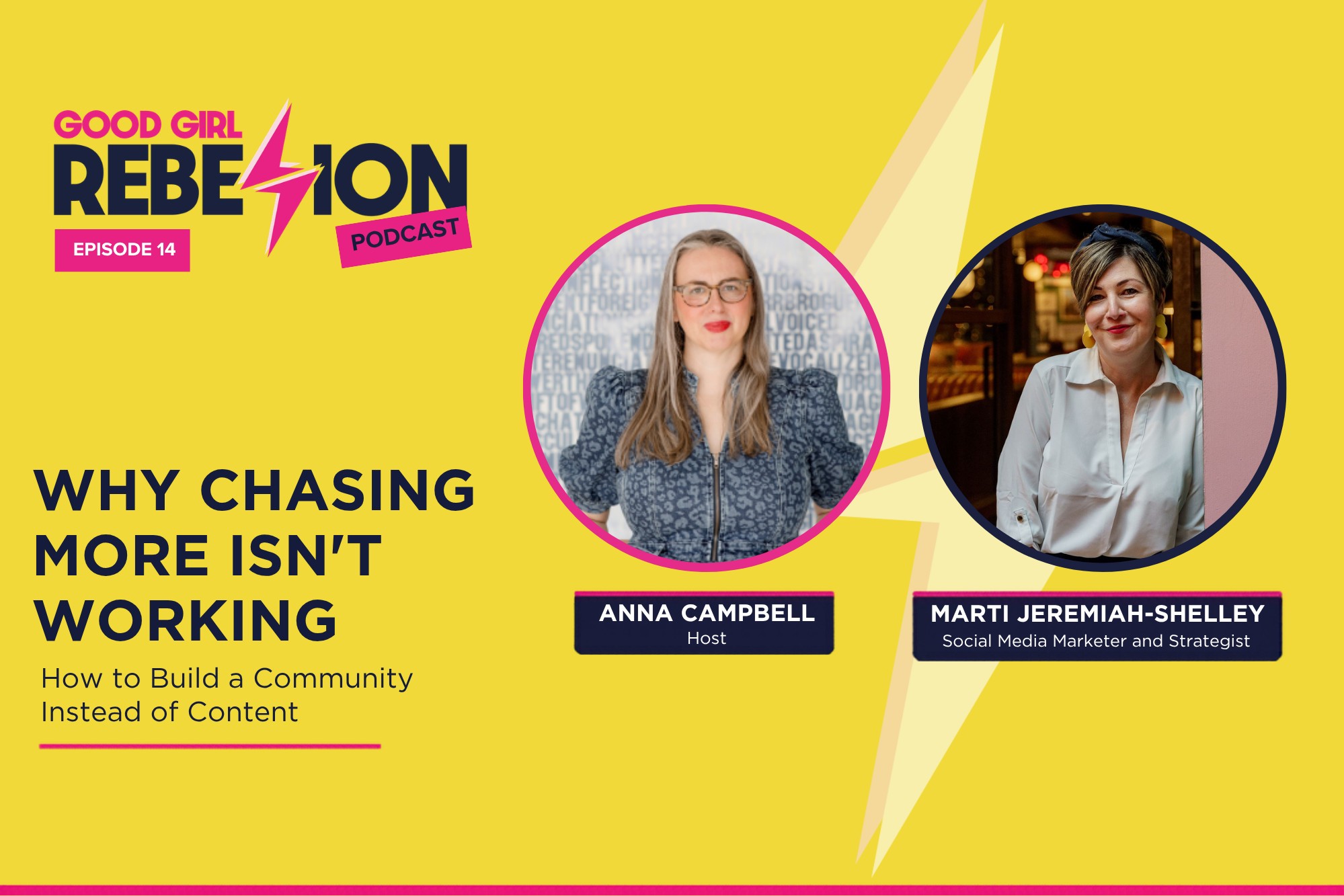
Episode 14 of the Good Girl Rebellion podcast.
Why Chasing More Isn't Working: How to Build Visibility, Trust and Community
If you run a small business, you have probably heard some version of this advice:
Post more.
Make more videos.
Join another platform.
Follow the latest trend.
Be more consistent.
Show your face.
Grow your audience.
There is always something else we are apparently supposed to be doing.
The result is that social media marketing can start to feel like another full-time job we did not apply for. We are running the business, serving clients, creating products, managing finances and trying to have some kind of life. Then we are told that we also need to become content creators, video editors, copywriters and personal brands.
But what if the answer is not more content? Because we need to keep our eye on the real goal - to be remembered and trusted by the right people.
In this episode of the Good Girl Rebellion Podcast, I spoke with Marti, founder of Wee Bit Social, about business visibility, sustainable social media marketing and why building a genuine community matters more than constantly chasing reach.
Marti has spent ten years helping small businesses, hospitality brands, creatives and corporate teams become more visible. Her philosophy is refreshingly straightforward: marketing should fit around your business and your life. It should not consume both.
Visibility is not about being louder
One of the strongest things Marti said during our conversation was:
“Visibility isn’t about being louder. It’s about being remembered by the right people.”
This matters because many women associate visibility with being performative, attention-seeking or relentlessly self-promotional.
We imagine that being visible means becoming the loudest person in the room, posting every day or sharing parts of our lives that we would rather keep private.
But visibility does not require us to become a different person. An introvert can be visible. A private person can be visible. Someone who dislikes dancing on video, following trends or sharing daily updates can still build a recognisable and trusted business.
The important question is not:
How can I become louder?
It is:
How can I help the right people understand and remember what I do?
For one person, that may mean short videos. For someone else, it might mean thoughtful LinkedIn posts, a newsletter, photographs, articles, podcast interviews or in-person networking.
The most effective marketing format is not necessarily the one everybody else recommends. It is the one that helps you communicate clearly and consistently without running yourself into the ground.
Your business does not necessarily need more content
We are not short of content.
Every day, we are surrounded by posts, videos, newsletters, podcasts, articles, adverts and opinions. Artificial intelligence has made it possible to produce even more of it, even faster.
The problem is not that audiences have nothing to consume. The problem is that they have very few reasons to remember most of what they see.
Marti made another important distinction:
“We actually don’t need more content. People need more reasons to trust you.”
Trust is rarely built through one viral post. It is built when someone encounters your work repeatedly and begins to understand:
what you know;
what you care about;
how you think;
what you offer;
and whether you are the kind of person or business they would feel comfortable approaching.
That process takes time.
This does not mean every business must post constantly for years before making a sale. It means that sustainable business visibility is usually cumulative.
People notice you. They encounter you again. They begin to recognise your name. They read something useful. They hear somebody recommend you. They attend an event or receive an email. Over time, your business becomes familiar enough to trust.
The goal is not simply to attract attention today. It is to build recognition over time.
Thoughtful content is not the same as perfect content
One of my favourite distinctions from the conversation was the difference between thoughtful and perfect.
Thoughtful content asks:
Is this useful?
Does this reflect what I genuinely think?
Will this help the person I want to reach?
Perfect content asks:
Will everybody approve of this?
That is a very different standard.
Trying to make our work thoughtful can improve it. We check the facts, consider the audience and communicate our ideas carefully.
Trying to make it impossible to criticise is an entirely different task and it’s one we can never complete.
For women who have learned to value approval, being visible can feel particularly personal. We may worry about how we look, whether somebody more experienced will disagree or whether people will think we are arrogant for claiming expertise.
Invisible Rules such as Stay Humble, Wait Until You’re Ready or Don’t Get It Wrong can turn what is just one social media post into a test of our entire professional worth.
We are no longer asking whether the post is good enough to serve its purpose. We are asking whether it is good enough to protect us from judgement and that is an impossible burden for any piece of content to carry. It’s no wonder we might get overwhelmed and not publish anything at all.
Good work does not always speak for itself
Many capable women have absorbed the idea that good work should speak for itself.
We should work hard, produce something excellent and trust that the right people will notice.
Sometimes they do but often, they do not.
This becomes particularly important when we move from employment into self-employment. In a job, there may already be a structure around us. We have a title, a team, a manager and an organisation that gives our work context.
When we run a business, we have to provide that context ourselves.
We have to tell people:
that the business exists;
what we do;
who it is for;
why it matters;
and how they can work with us.
This is not arrogance; it is part of running a business.
You can choose how you market. You can choose which platforms you use, how often you post and how much of yourself you share.
But if we want people to buy from us, refer us or invite us for great opportunities, they need some way to know what we do.
Doing good work matters, but so does helping the right people find it.
You do not need to be everywhere
One of the fastest ways to make marketing feel overwhelming is to believe we must be present on every platform.
Instagram. LinkedIn. TikTok. Facebook. YouTube. Substack. Email. Podcasts.
It is a lot.
Marti’s advice is to simplify.
Consider where your customers or clients are most likely to spend their time. Then consider which platforms you are willing and able to use consistently.
You might choose one main platform and one secondary place to repurpose some of that content. You may decide that focusing on networking is more commercially useful than adding another social media account.
The aim is not to follow an abstract definition of what a serious business owner “should” be doing. It’s to build a marketing system you can actually maintain.
Consistency is not a moral virtue. Missing a week of posting on Instagram does not mean you lack discipline or commitment.
Consistency is a strategic decision.
You can decide what it looks like for you.
An audience consumes. A community contributes
Social media encourages us to pay attention to numbers.
Followers. Likes. Views. Reach. Impressions.
These numbers can be useful, but they do not tell the whole story.
Marti described the difference between an audience and a community beautifully:
“You have an audience when you go online and they consume your content, but your community actually contributes.”
A community does more than watch.
People respond to you. They share your work. They recommend you when you are not in the room. They notice when you disappear. They return to your events or buy from you again.
They may also become the people you contact when business feels difficult or lonely.
Marti’s own community began after she attended a networking event that did not suit her. She posted on Facebook asking whether anybody else running a business wanted to meet for coffee.
At first, the meetings could be Marti and two other people.
She kept going.
Over time, that small invitation became a real community and a significant part of her business.
Community does not have to start with hundreds of people.
It starts when people are given a reason to connect, contribute and return.
Confidence usually comes after visibility
One of the biggest barriers to visibility is the belief that we should wait until we feel confident. But confidence is often the result of doing the thing, not a requirement we must meet before we begin.
You publish a post and discover that the world continues turning.
You share a video and realise that people are listening to your message rather than examining every detail of your appearance.
You attend a networking event, speak to three people and leave.
You express an opinion and find that disagreement is survivable.
Each experience gives you more evidence that you can handle being seen.
That does not mean online visibility carries no risk. Some women (fortunately a minority but still it happens) face harassment, discrimination or scrutiny that is very real. Nobody should be told that every fear exists only in her imagination.
But many of us are also judging our first attempt against somebody else’s tenth year.
We see a confident speaker, an established creator or a business owner who seems completely comfortable on camera. We do not see the years of awkward posts, uncertain decisions and practice that came first.
Your first attempt is not supposed to look like the work of somebody who has been doing this for a decade.
Sometimes the most useful thing we can do is lower the bar.
Not the standard of our final work, but the threshold for beginning.
Start with one deliberately manageable action
Visibility can feel enormous when we treat it as a complete reinvention of ourselves.
We imagine we have to become a consistent video creator, build a large audience and develop a perfect marketing strategy.
You do not need to solve all of that today. Choose one manageable action.
You might:
publish the post you have been editing;
share one photograph of your work;
explain one thing you help clients with;
send an email to your list;
introduce yourself to three people at an event;
contact somebody for a coffee;
or choose the one platform you are going to focus on for the next eight weeks.
Then do the next thing.
Visibility becomes less intimidating when it stops being an identity transformation and becomes a repeated practice.
You are not trying to become internet-famous.
You are helping the right people know that your business exists.
Build a business people remember
Small businesses do not usually need millions of followers. We need the right customers, the right clients and the right people willing to mention our name in rooms we are not in.
That comes from clear ideas, consistent presence, real relationships and enough repetition for people to remember us.
The answer may not be another content hack or a new platform.
It may be slowing down long enough to ask:
What do I want to be known for?
Who needs to know it?
How can I communicate it in a way that feels sustainable?
Am I creating something thoughtful, or trying to make it impossible to criticise?
You do not need to be louder.
You do not need to be everywhere.
And you do not need every post to be your best piece of work.
You need to become recognisable to the people who need what you do.
In this conversation, you will hear:
• Why producing more content does not automatically build more trust
• How to become visible without being on every platform
• The difference between an audience and a genuine community
• Why thoughtful marketing matters more than perfect marketing
• How perfectionism and fear of judgement can make visibility feel personal
• Why your first attempt should not look like somebody else’s tenth year
• How networking and real relationships support sustainable business growth
• Why confidence is often built through action
• How to create a marketing rhythm that fits around your business and your life
Listen to the podcast episode
Listen to Episode 14 on the links below.


In this episode of the Good Girl Rebellion Podcast, Marti and I talk about sustainable business visibility, slow social media, building trust, the difference between an audience and a community and why confidence usually develops after we start showing up.
Listen to Why Chasing More Isn't Working: How to Build Visibility, Trust and Community wherever you get your podcasts.
It’s time.
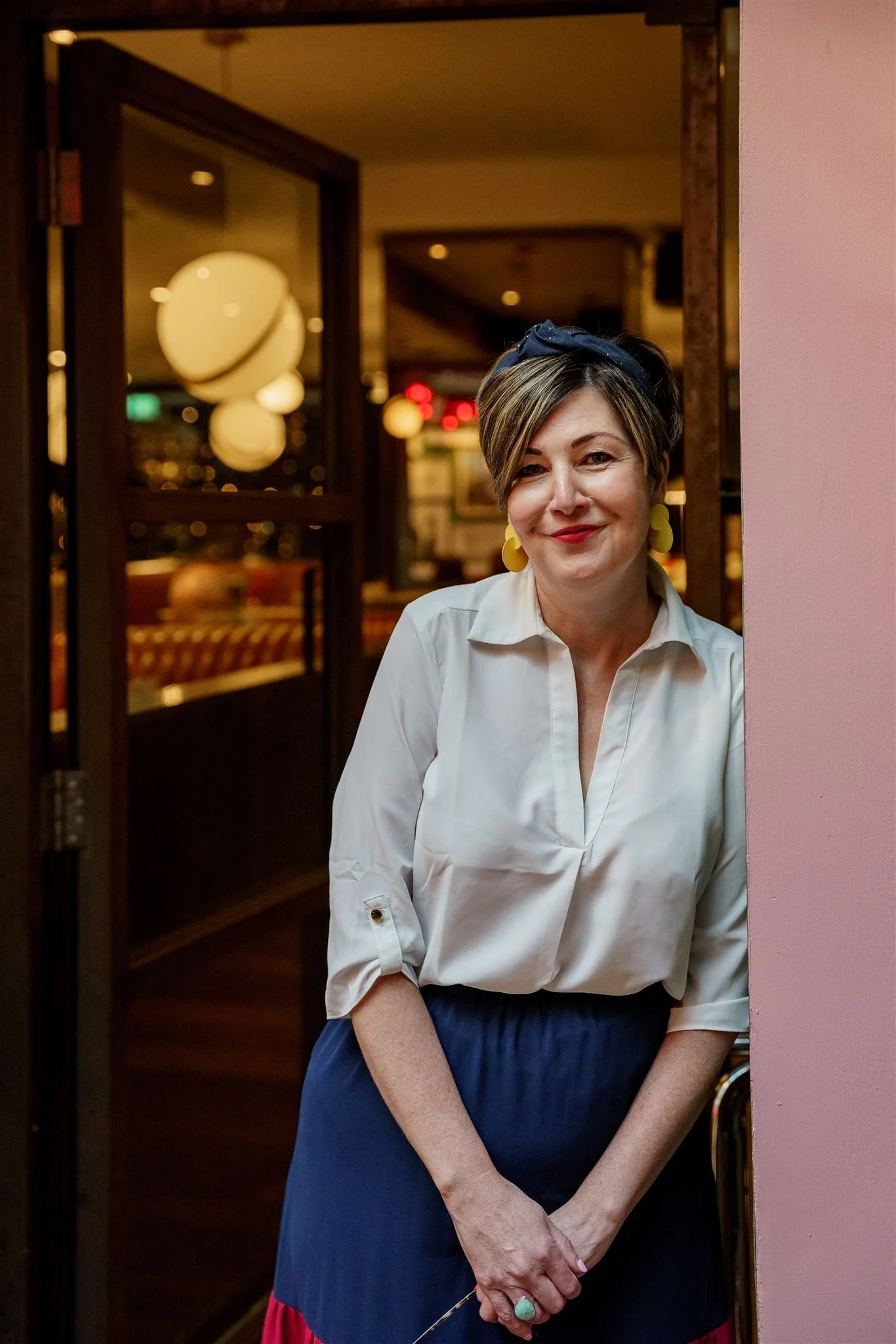
About marti
Marti Jeremiah-Shelley is the founder of Wee Bit Social and has spent the last ten years helping corporate teams, hospitality brands, creatives and small business owners build their visibility and create communities people actually want to be part of.
Her work spans Instagram and LinkedIn strategy, training and ongoing marketing support, alongside running her own networking and coworking events in Edinburgh. She believes that marketing should fit around your business and your life, not another full-time job you didn't apply for.
Marti is a big believer that you don't need to be everywhere, post constantly or run yourself into the ground to build a community that genuinely cares about what you do. Basically, it's about using marketing to promote your business but still being human!
www.weebitsocial.com
https://www.linkedin.com/in/martijeremiahshelley/
https://www.instagram.com/weebitsocial/