
Ep 11: Why midlife changes everything
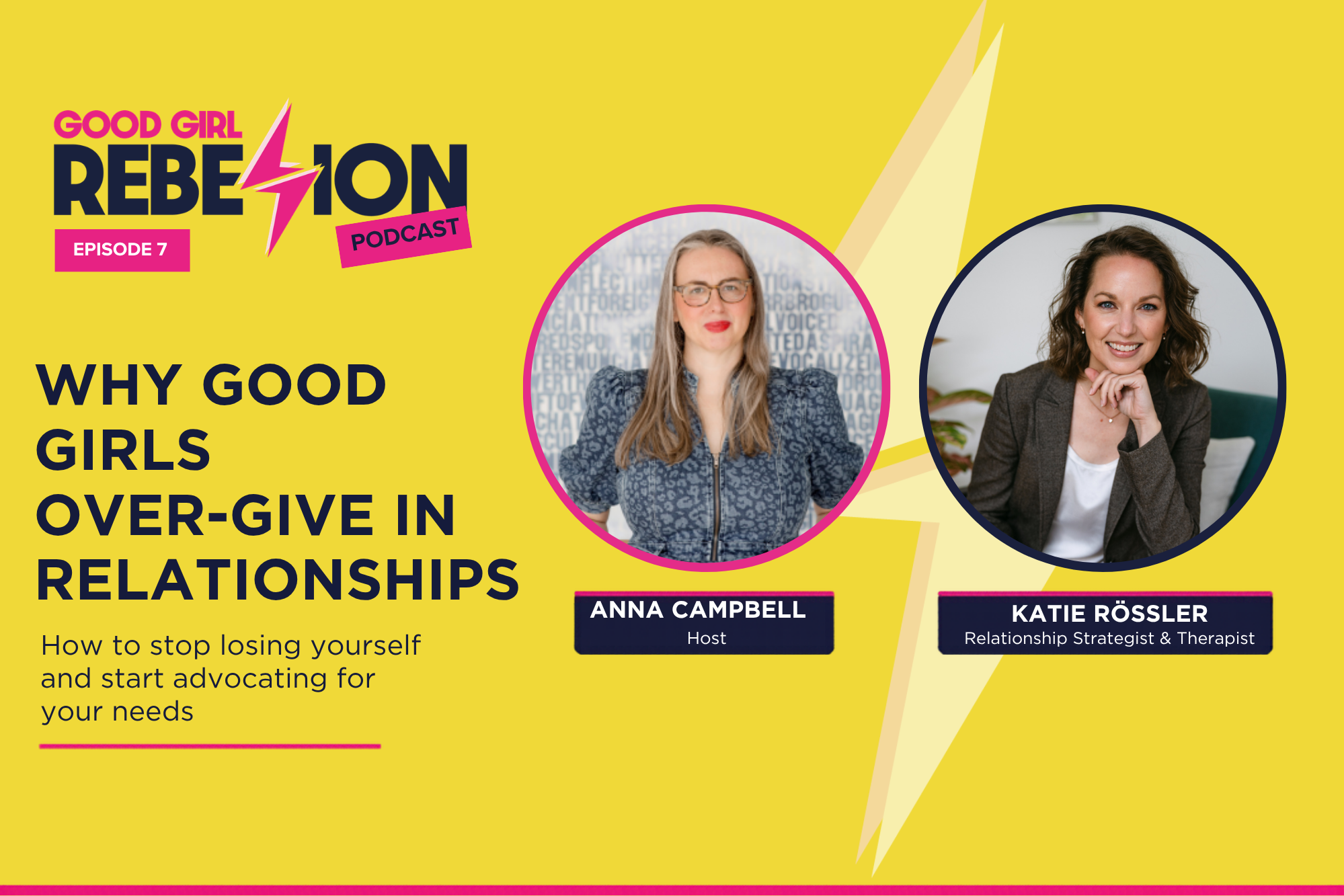
Episode 11 of the Good Girl Rebellion podcast.
Why Midlife Changes Everything: How to Redefine Success On Your Terms
When we are told about midlife and perimenopause we’re told that it’s the beginning of slowing down. That our energy reduces and we just need to manage our symptoms, lower our expectations and get through it.
This episode of the Good Girl Rebellion podcast is a little different from usual. Before the podcast existed, l joined Katie Rossler’s Behind the Transformation summit to talk about perimenopause and the conversation ended up becoming something much bigger than hormones.
It became a conversation about identity, boundaries, productivity and success.
What happens when the version of ourselves that has worked brilliantly for years suddenly starts feeling unsustainable?
Early in the conversation, Katie asks a deceptively simple question: what permission do women need to give themselves in perimenopause?
And I loved that question! Because I think it is a time when we can pause, rethink and ask whether the life we’re living is actually the one we want.
For many women, this stage of life doesn’t feel like becoming less ambitious or less capable - if anything, the opposite is true. Women are starting businesses later in life, making changes, taking risks and finally doing things they once thought had passed them by. But before that shift often comes a moment of stopping long enough to ask whether the path we are on is still the right one.
This conversation explores this through the lens of the Good Girl Rebellion and the idea that many women have spent decades being rewarded for traits that served them well. Being reliable, capable, thoughtful and adaptable. Thinking about other people first. These things often lead to successful careers, strong relationships and lives that look good from the outside.
But what if the strategy that got us here isn’t the strategy that takes us forwards? Sometimes the cost of maintaining old patterns is too high.
One of the ideas in the episode that I think is most important is the thought that what we often describe as irritability in perimenopause may not simply be hormones or mood swings. What if some of it is information?
What if anger is not dysfunction but feedback?
What if it’s our body saying this no longer works for me?
The conversation explores the possibility that what women often experience as becoming less tolerant may actually be becoming less willing to override themselves. We’re no longer willing to endlessly adapt or absorb emotional labour without consequence. There’s a line in the conversation about the nervous system withdrawing consent and that idea feels incredibly powerful because it reframes what can feel like failure into something much more intelligent.
There is also a really interesting discussion around productivity because many women have built identities around being the one who can cope, who can hold everything together. The one who says yes. The one who gets things done.
And that can become difficult when our capacity changes. We don’t become incapable but perimenopause and menopause leaves us less energy for the overfunctioning we have become accustomed to. So instead of asking how to get back to who we were, I think we need to ask - what strategy fits who I am now?
That difference is subtle but important because it moves us away from trying to restore old versions of ourselves and towards building lives that actually fit the people we are becoming.
Our conversation also touches on something many women find difficult to say out loud.
What happens when people around us are used to us being endlessly accommodating? What happens when we start saying no?
What happens when we become more visible in our opinions, clearer in our boundaries and less interested in managing everybody else’s experience of us?
That change can feel uncomfortable because relationships need to adapt too, and perhaps that’s part of what makes this phase feel so significant.
It isn’t just about personal transformation - it changes those around us too.
Midlife doesn’t change everything by taking things away, it changes everything by helping us become more ourselves.
key moments in this episode
• Why perimenopause can become a moment of recalibration rather than decline
• The permission women need to give themselves in midlife
• Good girl conditioning and why successful strategies can stop feeling sustainable
• Why irritability and anger may be information rather than something to suppress
• The idea that the nervous system can start withdrawing consent from overfunctioning
• Identity audits and asking whether the life you’ve built still fits
• Productivity, self-worth and the curse of the competent woman
• Why asking “how do I get back to who I was?” may be the wrong question
• Redesigning your life around who you are now rather than who you used to be
• Boundaries, resentment and learning to pause before saying yes
• Visibility, being liked and becoming more comfortable disappointing people
• Why midlife may not be about becoming somebody different but becoming more yourself
• Why ‘full colour, not beige’ became a powerful metaphor for midlife transformation
Listen to Episode 11 on the links below.



If you’ve been feeling the tension between who you’ve always been and who you’re becoming, this conversation is for you.
It’s time.

About Katie
Katie Rössler is a relationship strategist, licensed therapist, and creator of the REBUILD method, a transformational relationship alignment program for high-achieving, international couples. She’s the author of two books, host of the Relationship Reset podcast, and has spoken on stages around the world. With over 15 years of clinical and coaching experience, Katie guides couples from silent resentment to deep reconnection and supports women in perimenopause as they evolve into the powerful, grounded leaders they’re becoming.
Website: www.katierossler.com
Podcast: www.thebalancecodepodcast.com
Instagram: https://www.instagram.com/katie.rossler/
Behind the Transformation, Deeper Conversations on the Emotional Reality of Perimenopause https://katierossler.com/transformation/